FROM I775 THROUGH THE LATE I800S FASHION AND CHEMISTRIES GAVE RISE TO NEW AND VIBRANT DYES. THEIR USE OF POISONOUS SUBSTANCES- HEAVY METALS SUCH AS ARSENIC, LEAD, AND OTHERS, CREATED RICH NEVER BEFORE SEEN HUES OF GREEN, YELLOW, RED, PURPLE, GOLD ETC. GOODS WERE INUNDATED WITH THESE NEW AND BRIGHT COLORANTS. PEOPLE ADORNED THEIR HOMES WITH WALLPAPER, FURNITURE, PAINTS, CANDLES, BOOKS , AND TEXTILES LACED WITH POISONS. THEY WENT AS FAR AS TO USE THEM IN FOOD DYES FOR CANDIES AND IN CHILDRENS TOYS. PARIS GREEN CONVERTED FROM PIGMENT TO INSECTICIDE DUE TO ITS POISONOUS NATURE. ANILINE DERIVATIVES ARE USED IN THE AGRICULTURAL INDUSTRY TO SYNTHESIZE HERBICIDES. BY BLENDING INSECTS AND HISTORICAL TOXINS TOGETHER I AIM TO SPARK CONVERSATION ABOUT MICRO-ENVIRONMENT AND INDUSTRIALIZATION ON FRAGILE ECOSYSTEMS, AS WELL AS THE QUALITY OF LIFE OUR ANCESTORS ENDURED.
Sculptural Insects Inspired by Toxic Synthetic Pigments of the 1800s
Arsenic Scheels Green
Lady Mantis
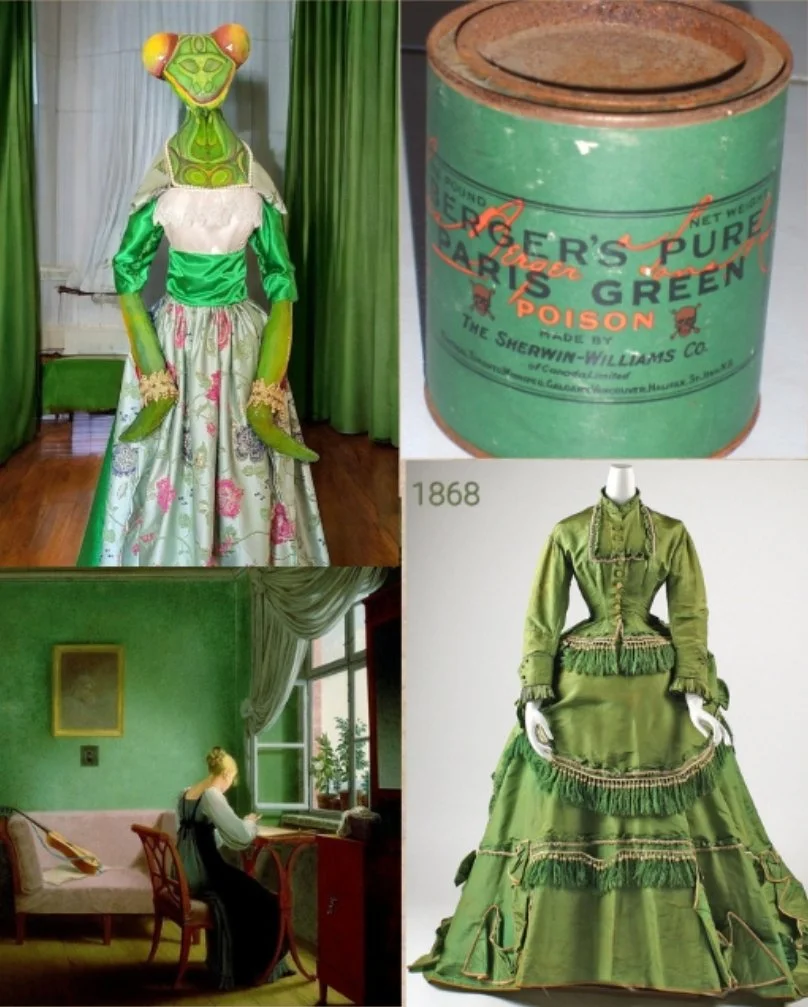
The most infamous pigment (not a true dye) emerald green or "Scheels green" also called "paris green" in later years. Synthesized by the mixture of Copper Arsenite providing a lush garden like hue. Because of the difficulty of obtaining bright and lasting greens using natural dyes it became wildly popular in the Regency and Victorian eras. The pigment most notably effected those who worked creating the arsenic laced commodities, causing skin lesions, and respiratory issues. Exposure to the toxin was documented/to have turned the whites of the eyes fingernails, and internal organs green. This color killed many even past the point of common knowledge of the deadly substance and its repercussions on health.
My sculpture connects Victorian synthetic pigments to the natural world that attempted to imitate and dominate. Paris Green was not only used in fashion and wallpaper but later as an insecticide. By clothing a praying mantis in the color historically used to kill insects, the piece collapses distinctions between ornament and extermination, luxury and ecological destruction.
Chrome Yellow and Aniline Black
Madame Butterfly
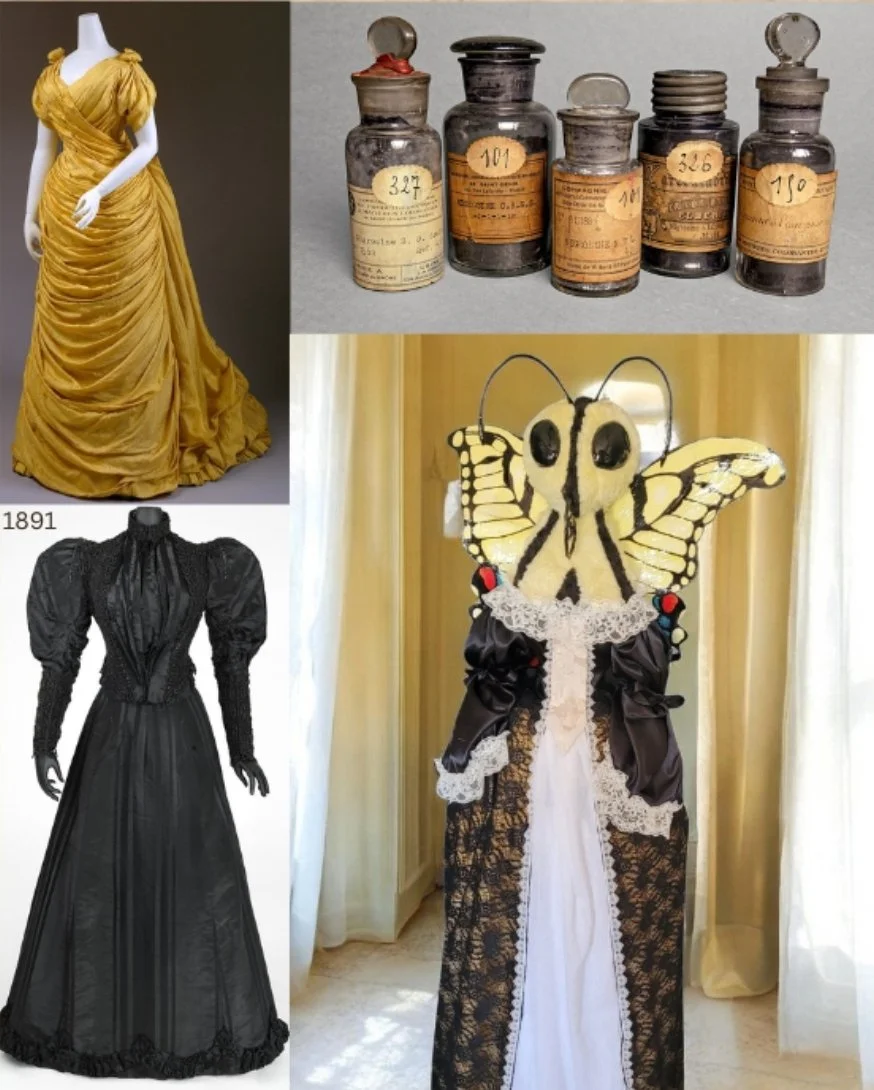
Aniline black dye began commercial use in the 1860s-was notoriously toxic due to aniline itself being a derived from coal tar, but also from the chemicals that were required to fix the dye to the fabric. Potassium dichromate, copper chloride, and arsenic were used as the fixatives resulting in both consumer and occupational health hazards Chrome Yellow invented in 1804 utilized compounds of lead and hexavalent chromium. Used paint pigment, (think Van Gogh) bookbinding, food coloring, and textile dyes. One of the cumulative toxic effects included organ damage, neurological issues, cancers and various reproductive health. A swallowtail butterfly draped in a gown of Chrome Yellow and Aniline Black becomes a symbol of fragile beauty altered by industrial desire.
The work explores transformation, spectacle, and the hidden violence beneath ornamental excess. Naturally unnatural, as though the industrial pigments are imitating the warning colors nature already created
Picric Acid & Metallic Wrappings
Miss Ant
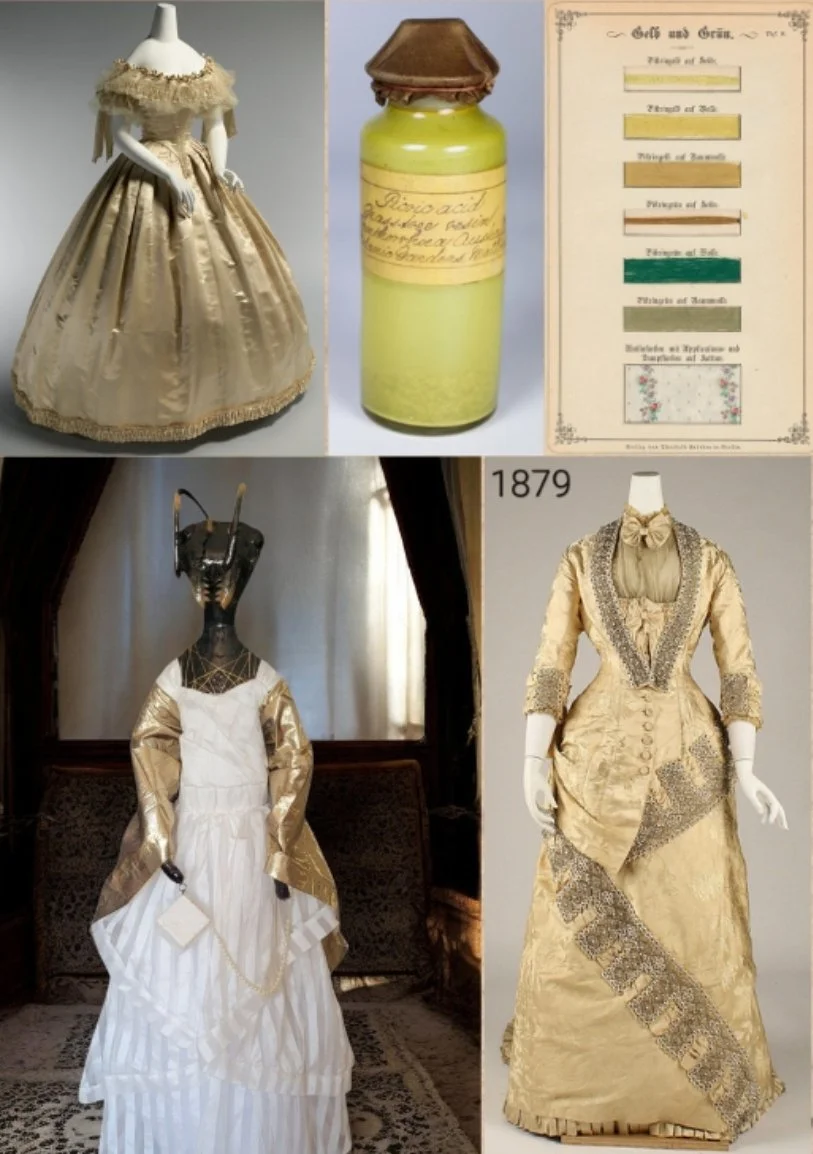
Victorian 1860s artisans achieved lustrous, "golden" textiles by pairing picric acid with metallic wrapping Picric acid dye (trinitrophenol), cause a myriad of health issues especially among workers. Long term exposure to the chemical caused systematic poisoning and would turn the skin completely yellow, giving way to the nickname "canary girls". Regarding the metal wrappings cheaper than precious metals, tinsel was often made of lead. Leading to severe health hazards for both makers and consumers alike. This work pairs a humble sugar ant with the shimmering picric golden sash.
Ants are drawn to sweetness accumulation, and collective labor, becoming symbols of consumption and desire. The shimmering cloth references both luxury and hazard. Created to appear precious while carrying toxic and volatile origins.